Making and materials
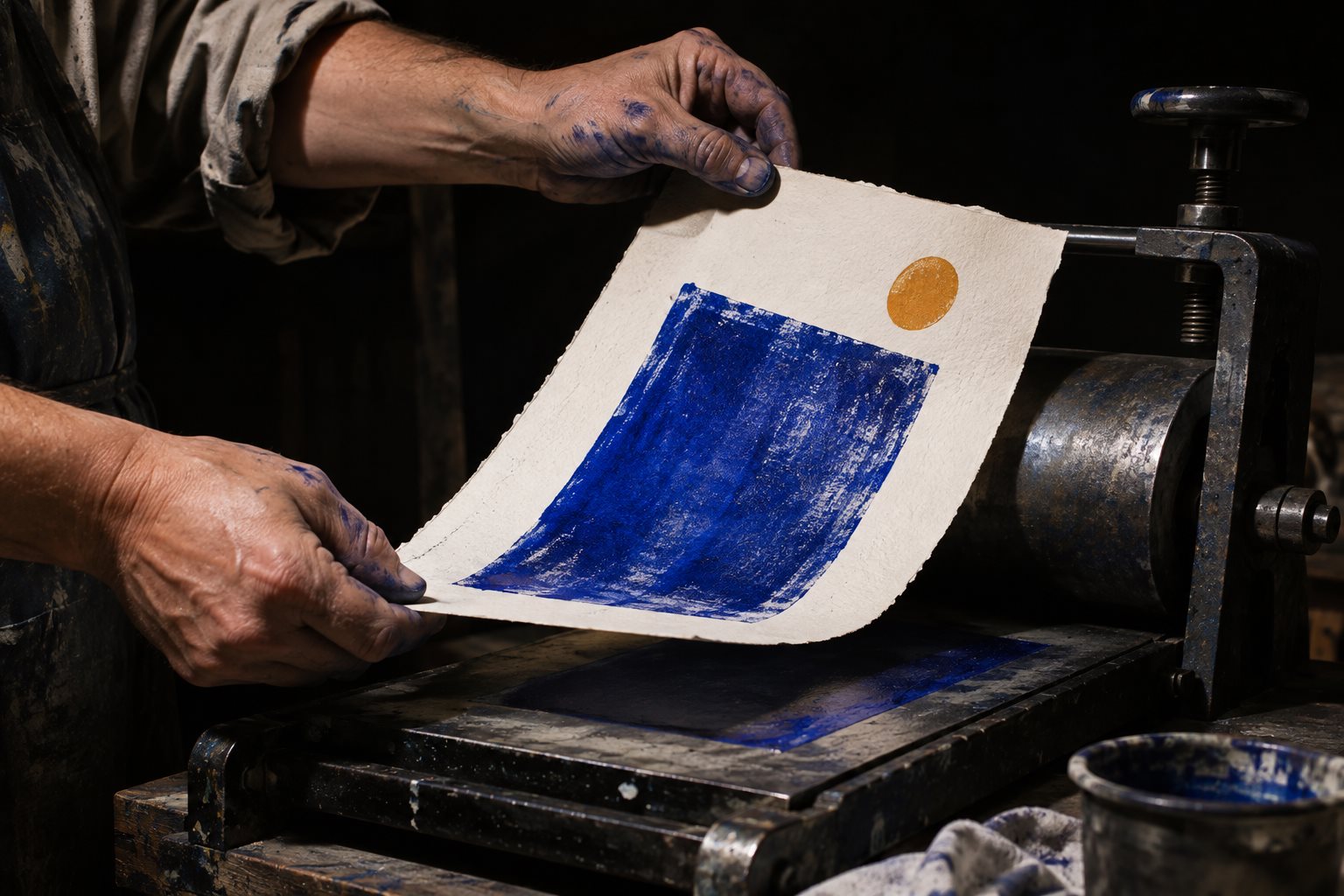
What paper keeps
A print is more than an image. Its surface holds the decisions, pressure and small variations of making.
Read the story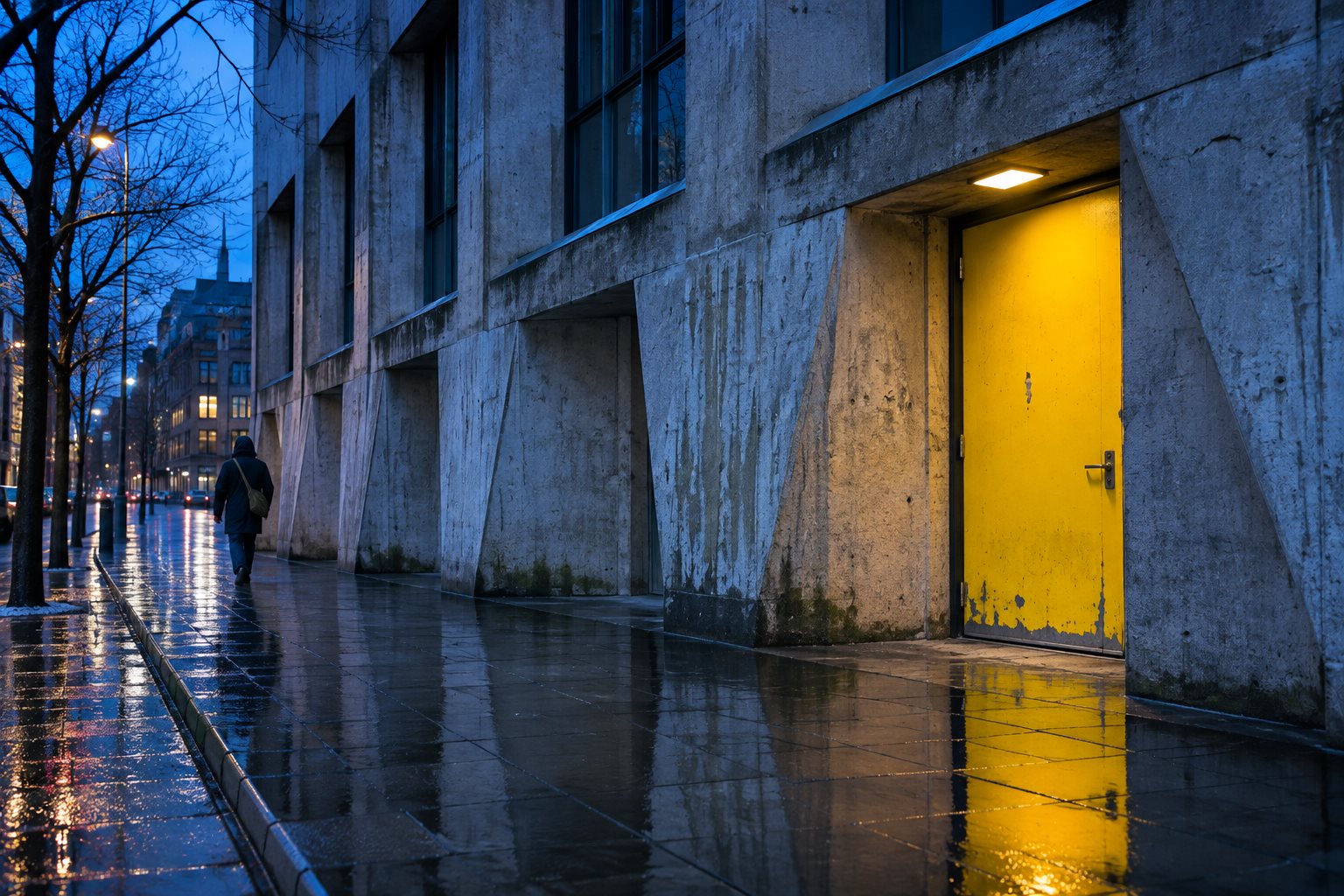
Most of us know a version of the city made from destinations. There is the station, the corner shop, the door we are trying to reach. The spaces between them become a route rather than a place, familiar enough to cross without paying much attention.
Then something small interrupts the pattern. A painted door catches the last light. Rain makes a handrail brighter. A window holds a reflection from the other side of the street. Nothing important has happened, but the route is briefly visible again.
Looking closely is not the same as finding hidden beauty everywhere. A street can be uncomfortable, inaccessible or poorly cared for. Attention includes noticing what is difficult and who has to work around it. The useful question is not whether a place makes a good picture, but what the picture leaves outside its frame.
Try walking a familiar route without making a photograph for the first few minutes. Notice where people pause, where the pavement narrows and where the sound changes. Look at the temporary arrangements: a chair brought outside, a handwritten notice, an improvised shelter from rain. These details show how people adapt the city they have.
If you do take a photograph, stay with the subject long enough to understand your position in it. Respect private space and the people whose ordinary day is becoming your image. A photograph can record an encounter without treating every person as available material.
Returning to the same route brings another kind of attention. The door is open this time. A shop has changed. The light reaches a different wall. Familiarity does not have to make a place disappear; it can make small changes easier to recognise.
The ordinary is not an absence of subject matter. It is where most of life takes place. Looking again can be a modest way to understand the places we share and the decisions that keep shaping them.
Return to a familiar subject and notice what changes with your attention.
Look beyond the first frame. Who made the choices, and whose account would change the story?
Treat permission, attribution and the circumstances of an encounter as part of the work.
Making and materials
A print is more than an image. Its surface holds the decisions, pressure and small variations of making.
Read the story