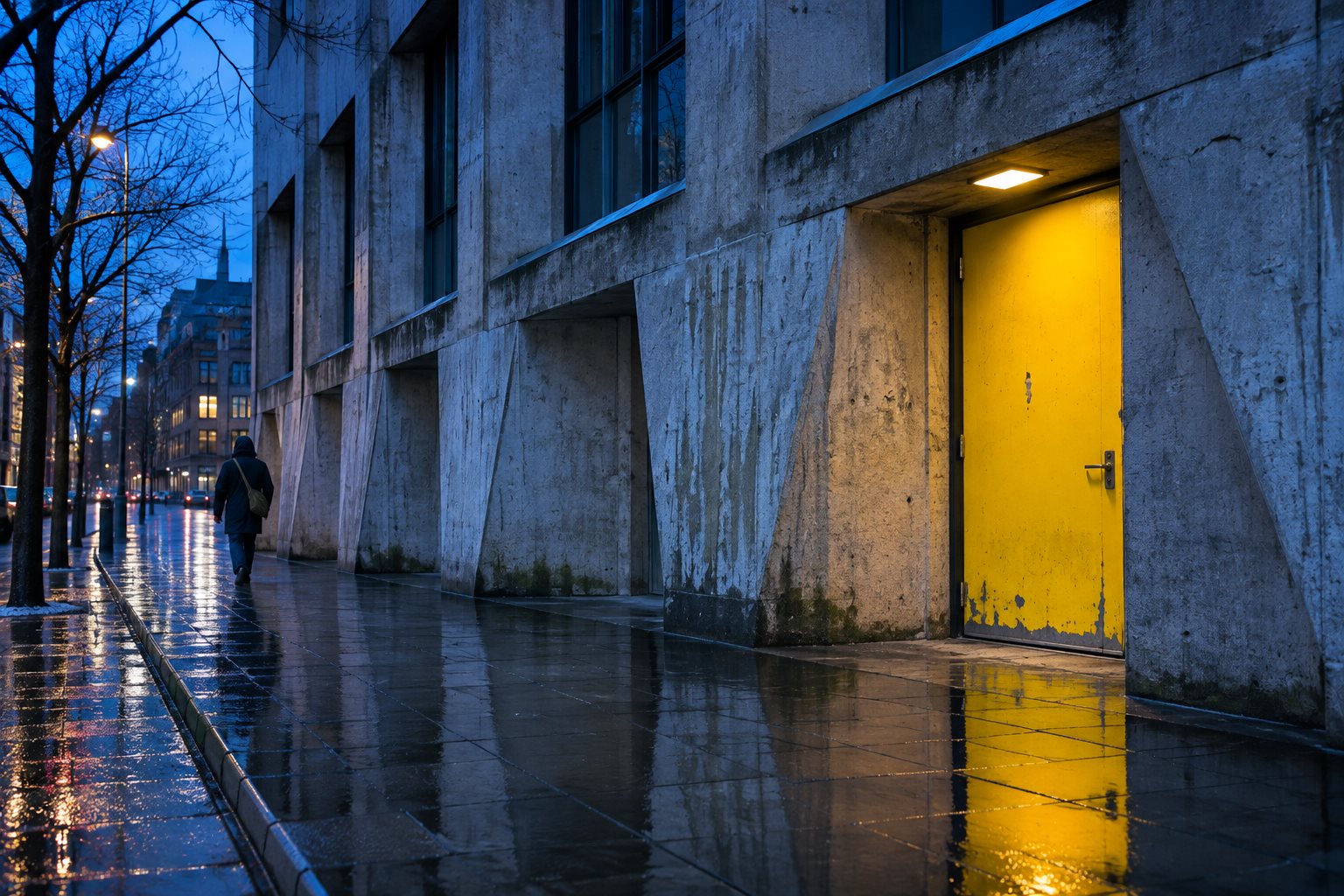
The everyday city
Look again at the ordinary
A yellow door, a repeated route and the city we stop noticing when we are trying to get somewhere else.
Read the story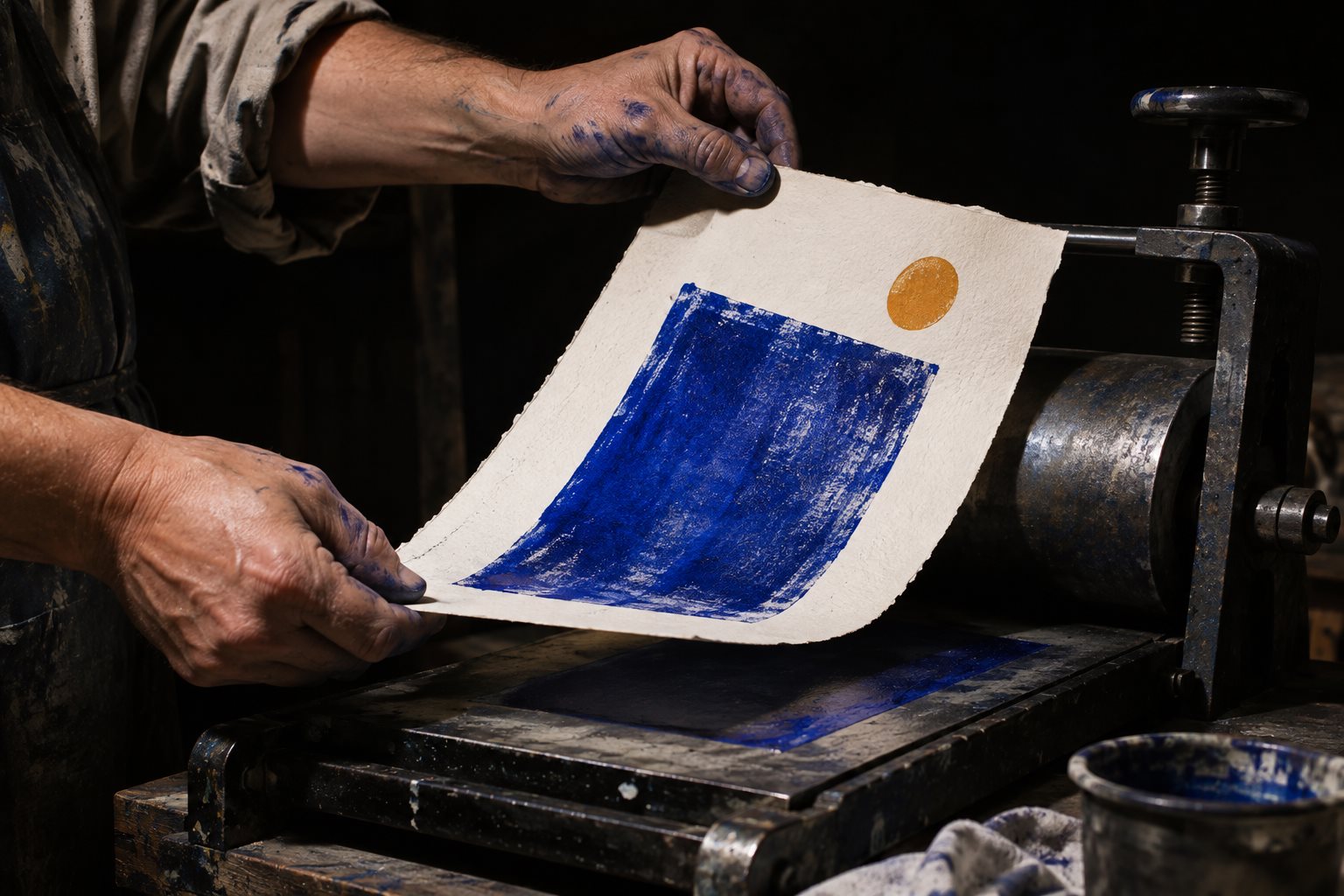
A print begins to change when you pick it up. From a distance it may seem like a flat image. Close to the surface, the paper has weight, the ink sits differently in the fibres and a line may carry the slight pressure of the process that made it.
These material details are not decoration added after the idea. They help determine how the image is read. A dense colour on a smooth sheet behaves differently from the same colour on a soft, absorbent paper. The choice affects contrast, touch and the pace at which someone looks.
Making a print asks for decisions in sequence. Prepare the image, choose the stock, test the ink, register the layers. Each stage limits and opens possibilities for the next. A small adjustment can change the whole relationship between a mark and the space around it.
Variation is part of that conversation. One impression may be lighter at an edge; another may hold more texture. The distinction between an intended variation and a fault depends on the work. It is something the maker has to judge, rather than a quality that can be measured from distance alone.
There is also a practical life beyond the studio. Paper needs to be stored, transported and handled. Editions need clear descriptions. Buyers and readers deserve to know what they are receiving, how it was made and how to care for it. Material attention includes those ordinary responsibilities.
Looking at a print slowly can reveal this chain of choices. Turn it towards the light, notice the edge and leave room for the unprinted surface. The image is still there, but so is the evidence of making.
That may be what paper keeps most clearly: not a romantic story of craft, but a set of decisions made tangible enough for someone else to encounter.
Return to a familiar subject and notice what changes with your attention.
Look beyond the first frame. Who made the choices, and whose account would change the story?
Treat permission, attribution and the circumstances of an encounter as part of the work.
The everyday city
A yellow door, a repeated route and the city we stop noticing when we are trying to get somewhere else.
Read the story